<script type="application/ld+json">
{ "@context": "https://schema.org", "@type": "Article", "@id": "https://sonio.ai/blog/sustainable-sonographer-workforce/#article", "url": "https://sonio.ai/blog/sustainable-sonographer-workforce/", "headline": "How to build a Sustainable Sonographer Workforce", "description": "The sonographer shortage is reshaping healthcare systems worldwide. From rethinking education and recruitment to integrating AI-driven tools, discover how to build a workforce that can thrive long term.", "image": "https://cdn.prod.website-files.com/69e878ebd11e9c0488bf170b/6a0dca2e9456e9ea84d8969b_How-to-build-a-Sustainable-Sonographer-Workforce-600x400.webp", "datePublished": "Tue Sep 02", "dateModified": "Thu May 21", "inLanguage": "en-US", "articleSection": "womens-health", "author": { "@type": "Person", "name": "lopa-patel" }, "publisher": { "@id": "https://sonio.ai/#organization" }, "isPartOf": { "@id": "https://sonio.ai/#website" }, "mainEntityOfPage": { "@type": "WebPage", "@id": "https://sonio.ai/blog/sustainable-sonographer-workforce/" }
}
</script>
Women's Health
September 2, 2025
by
Lopa Patel
How to build a Sustainable Sonographer Workforce
The sonographer shortage is reshaping healthcare systems worldwide. From rethinking education and recruitment to integrating AI-driven tools, discover how to build a workforce that can thrive long term.
Healthcare systems face significant operational challenges due to the ongoing shortage of qualified sonographers. Ensuring a sustainable workforce requires comprehensive strategies encompassing education, recruitment, retention, technological integration, and advocacy.
Enhanced Education
Strategic partnerships between healthcare providers and educational institutions expand training capacities and directly address workforce shortages. Hybrid educational models combining online courses with hands-on clinical training improve accessibility and outcomes, particularly for non-traditional students.
“The onboarding timeframe varied from one month to a year in different organizations. Many respondents noted that because each individual is unique, it is difficult to establish a standard duration for onboarding.”
Lashell Jones
Ultrasound specialist, RDMS, RDCS (FE)
Competitive Recruitment and Retention
Offering competitive salaries, comprehensive benefits, clear professional development paths, and supportive workplace cultures significantly improves employee satisfaction and retention. A positive and inclusive workplace environment reduces burnout and enhances overall workforce stability.
Automation of Tasks
These days, the ultrasound reporting platform like Sonio is equipped with the facility to automate the end-to-end prenatal ultrasound workflow. It can help accelerate the following tasks among sonographers:
Scheduling: Automated systems help medical staff focus more on patient care and building meaningful connections, which can enhance patient satisfaction. By reducing mistakes from handling paperwork manually, these solutions make healthcare more dependable.
Billing errors: Manual data entry can lead to errors, wrong charges, and denied claims, which delay payments and increase administrative work. Integrated ultrasound reporting software solves these problems by automating billing tasks, ensuring correct CPT and ICD-10 codes, and reducing duplicate charges and missed procedures. By connecting with the billing system, this software helps healthcare providers simplify their financial processes, reduce revenue losses, and improve efficiency.
Reporting: The ultrasound reporting solution can fills in report details automatically using ultrasound results, saving time and effort for healthcare workers. Clinicians can also tailor reporting methods to match their findings, helping them make the best treatment choices.
Follow-up processes: The reporting software could also makes things easier by automatically transferring examination details and medical history. By using electronic health records, telehealth, and AI, healthcare facilities can run more smoothly, offer more services, and enhance patient care. With advancing technology, there are many opportunities to improve ultrasound practices, helping to make future healthcare more efficient and accessible.
Access to AI-driven tech
AI-driven technologies such as Sonio’s are designed to enhance workflow efficiency and reduce workloads. As an FDA-approved AI technology, Sonio is committed to maintaining high-quality standards and ensuring comprehensive exams that support sound clinical decisions.
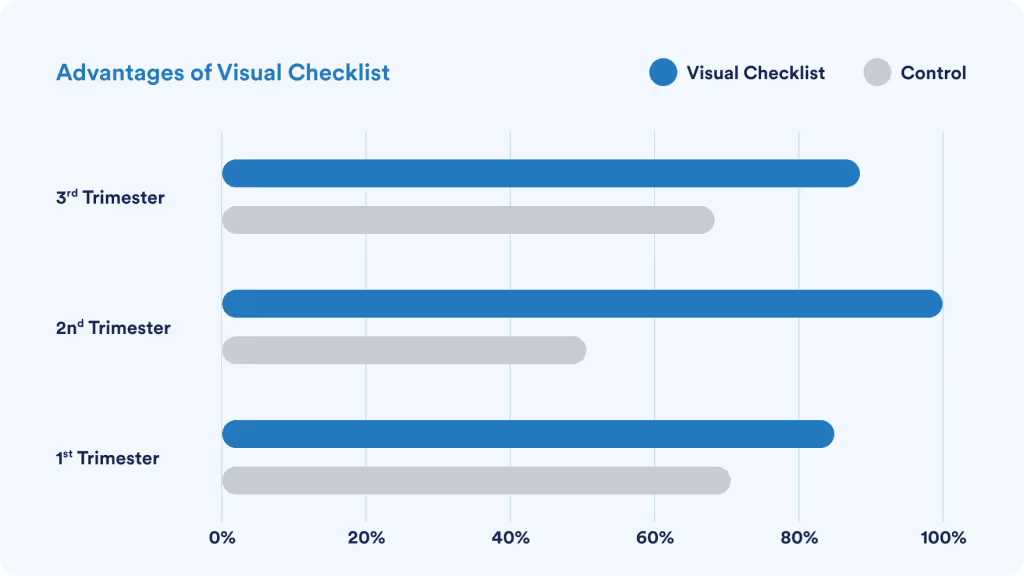
A key feature of Sonio is its automated AI-driven visual checklist*, which provides real-time oversight to ensure exams are thorough. This feature minimizes liability risks and facilitates retrospective audits 31. Furthermore, another AI module - Sonio Suspect could identify congenital anomalies in ultrasound images as early as 11 weeks into pregnancy, underlining its potential to significantly enhance ultrasound practices 26.
Advocacy for flexible licensing and increased public awareness enhances the profession's visibility and attractiveness to prospective candidates. Policy initiatives promoting workforce mobility and increased funding for educational programs are crucial in addressing systemic workforce challenges.
Conclusion
Addressing the sonographer shortage requires coordinated action involving education, technology, recruitment, and advocacy. Implementing these comprehensive solutions will ensure a sustainable and resilient healthcare workforce capable of meeting future demands.
Watch the replay of the webinar with Lashell Jones RDMS-RDCS (FE), MFM Ultrasound Specialist for “Mapping Out Your Future: How to Upskill as a Sonographer.”
Ready to improve your patient care?
Contact us and discover Sonio, the next-generation of Prenatal Ultrasounds.