The global shortage of qualified sonographers poses severe challenges to healthcare systems, impacting patient outcomes and operational efficiency. Diagnostic medical sonographers are crucial for providing essential imaging services, yet their availability is not meeting current and future demands. Understanding the multifaceted causes behind this shortage is critical to addressing the crisis effectively.
The global shortage of qualified sonographers poses severe challenges to healthcare systems, impacting patient outcomes and operational efficiency. Diagnostic medical sonographers are crucial for providing essential imaging services, yet their availability is not meeting current and future demands. Understanding the multifaceted causes behind this shortage is critical to addressing the crisis effectively.
Aging Workforce
A substantial percentage of the existing sonography workforce is approaching retirement age, leaving significant gaps in healthcare systems.
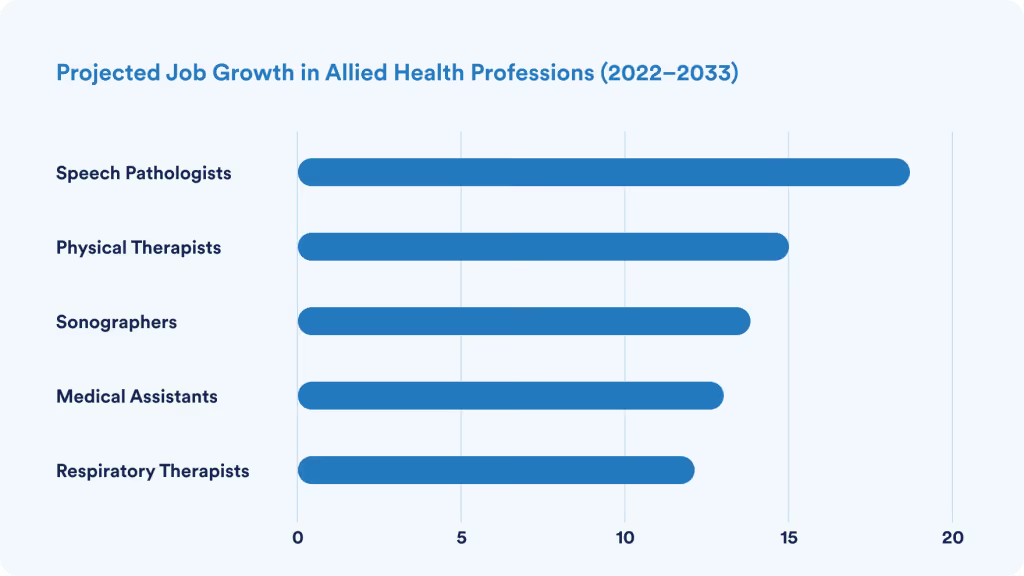
According to the Bureau of Labor Statistics, sonographer demand is expected to grow by 11% by 2033, outpacing the rate of new professionals entering the field. The impending wave of retirements exacerbates the shortage, particularly in regions with already limited staffing resources.
In the current healthcare landscape, shortages of staff and essential resources have become increasingly widespread, affecting not only healthcare facilities but also the entire healthcare system. These deficiencies manifest in multiple ways, creating a domino effect that impacts every aspect of patient care and healthcare provision. This situation results in extended wait times, reduced patient satisfaction, and increased burnout among healthcare workers. - Lashell Jones, Ultrasound specialist, RDMS, RDCS (FE)
“In the current healthcare landscape, shortages of staff and essential resources have become increasingly widespread, affecting not only healthcare facilities but also the entire healthcare system. These deficiencies manifest in multiple ways, creating a domino effect that impacts every aspect of patient care and healthcare provision. This situation results in extended wait times, reduced patient satisfaction, and increased burnout among healthcare workers.”
Lashell Jones
Ultrasound specialist, RDMC, RDCS(FE)
Educational Limitations
Educational barriers significantly contribute to the sonographer shortage. High tuition costs and limited access to accredited programs create obstacles for aspiring professionals.
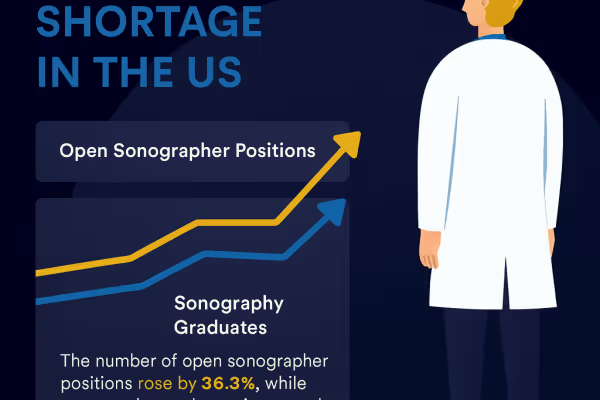
A 2024 study states that from 2011 to 2021, the number of open sonographer positions rose by 36.3%, while sonography graduates increased by only 23%—amplifying the mismatch between training capacity and market demand. The limited number of training programs available restricts the inflow of newly trained sonographers.
The distribution of sonographers is uneven, with rural and underserved regions disproportionately affected. Patients in these areas face extensive wait times for ultrasound procedures, delaying critical diagnoses and treatments. Such disparities exacerbate healthcare inequities, leading to poorer patient outcomes compared to urban centers.
Limited Visibility
Diagnostic medical sonography lacks sufficient representation in career counseling and public awareness campaigns. As a result, fewer prospective students are aware of or interested in pursuing sonography as a career. Increasing the visibility of this critical profession is vital for attracting a new generation of professionals.
Increasing Demand
An aging population and technological advancements have significantly increased the demand for diagnostic imaging services. This rising need places additional stress on an already stretched workforce. Technological innovations enable more advanced diagnostic capabilities but simultaneously require increased personnel to manage and operate sophisticated equipment.
The shortage of qualified sonographers negatively impacts healthcare delivery in multiple ways. Delayed patient care, resulting from extended waiting periods for imaging services, often leads to worsened patient conditions and outcomes. According to the American Hospital Association (2023), such delays have widespread implications, causing increased patient anxiety and complicating treatment plans.
Operational costs also escalate as healthcare facilities increasingly rely on temporary staffing solutions and overtime pay. These financial pressures divert critical resources from patient care initiatives, creating a cyclical problem of resource allocation and staff burnout.
High burnout rates among existing sonographers exacerbate the shortage. A large survey published in Journal of Diagnostic Medical Sonography (2024) involving U.S. and Canadian sonographers found that over 50% of respondents experienced moderate-to-severe personal and work-related burnout
Burnout, driven by long hours and high workloads, leads to increased turnover rates, further perpetuating workforce instability.
Strategic Solutions
Comprehensive strategies are necessary to address the sonographer shortage effectively. Expanding educational opportunities and offering financial incentives such as scholarships or loan forgiveness programs can attract more students to sonography careers. Establishing robust recruitment initiatives and retention programs that emphasize career growth and work-life balance can stabilize the workforce.
The integration of AI-driven technologies, such as Sonio’s ultrasound reporting, offers promising solutions to alleviate workload pressures. AI-powered tools streamline diagnostic processes, enhance diagnostic accuracy, and significantly reduce manual workload, enabling sonographers to focus on critical tasks.
Policy advocacy is equally important. Enhancing public awareness and promoting sonography careers through strategic campaigns can attract new talent to the profession. Advocacy for flexible licensing laws can also facilitate workforce mobility, addressing geographic disparities.
Conclusion
Addressing the sonographer shortage requires coordinated action involving education, technology, recruitment, and advocacy. Implementing these comprehensive solutions will ensure a sustainable and resilient healthcare workforce capable of meeting future demands.
Watch the replay of the webinar with Lashell Jones RDMS-RDCS (FE), MFM Ultrasound Specialist for “Mapping Out Your Future: How to Upskill as a Sonographer."
Ready to improve your patient care?
Contact us and discover Sonio's cloud-based ultrasouund reporting solution