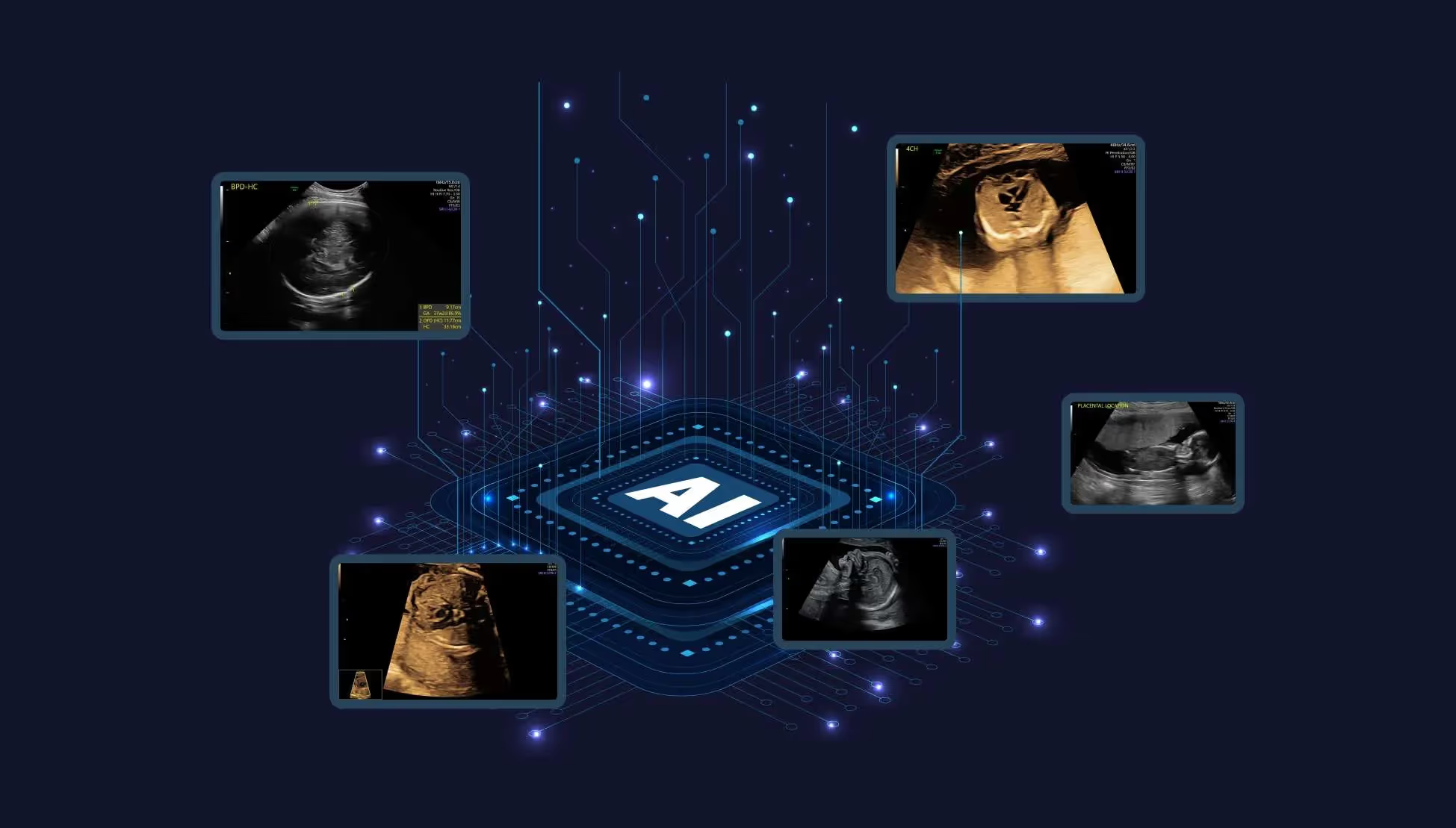
AI processes vast amounts of data and detects patterns that may be invisible to humans. In prenatal care, it helps analyze ultrasound images and predict pregnancy outcomes. Its strength lies in automating processes such as quality control, improving accuracy, and supporting healthcare providers by reducing the need for manual tasks.
AI-powered algorithms are being developed to assist in real-time ultrasound image acquisition, improving reproducibility and diagnostic confidence. Studies indicate that AI can help identify fetal abnormalities such as congenital heart defects, neural tube defects, and growth restrictions earlier and with higher precision than traditional methods (Source)
AI-powered tools assist doctors in capturing clearer images and making faster decisions. Studies show AI detects conditions like congenital heart defects and growth issues earlier than traditional methods (PMC10179567).
AI is already used in prenatal care and studies have shown that AI can enhance diagnostic accuracy in maternal-fetal medicine. Learn more about How AI is Revolutionizing Prenatal Medical Practices from this webinar replay.
Opportunities of AI in Prenatal Ultrasound
Boosting Efficiency in Prenatal Ultrasound
AI significantly increases efficiency, especially in the generation of ultrasound reports. By quickly analyzing ultrasound images and processing measurements, an ultrasound report can be generated automatically, without the need for manual intervention. Practitioners can also receive instant feedback on exam and image quality, meaning any suboptimal images can be retaken immediately. This allows doctors to see more patients and spend more time on care.
For instance, AI algorithms have demonstrated high accuracy in detecting fetal ventriculomegaly, a condition affecting brain development, using automated three-dimensional ultrasound analysis. These advancements allow for earlier detection and timely interventions, improving perinatal outcomes (MDPI).
Enhancing Patient Care with AI Ultrasound
Healthcare professionals like doctors and sonographers can spend more time discussing treatment options and addressing concerns. With AI handling administrative work, patient interactions improve.
Enriching Diagnostic Accuracy with AI
AI improves the detection of fetal conditions like growth restrictions, congenital defects, and placental issues. By identifying subtle anomalies in ultrasound images, AI can reduce misdiagnoses.
For instance, AI models have shown high accuracy in detecting fetal ventriculomegaly, a brain development issue. Early detection could helps doctors plan better interventions, improving outcomes (MDPI).
AI as a Training and Support Tool
AI helps train medical professionals by providing real-time feedback. It guides sonographers in capturing high-quality scans. AI-based decision-support tools assist in interpreting results, reducing human error. Virtual assistants and simulations further help train clinicians, increasing confidence in prenatal diagnostics.
Barriers to AI Adoption in Prenatal Ultrasound
Despite its advantages, AI adoption in prenatal ultrasound faces hurdles.
Trust and Data Reliability Issues
Some doctors hesitate to trust AI-generated diagnoses. They worry about errors and biases in AI models. AI must be trained on diverse datasets to work across different patient populations. If data is not representative, AI predictions may be flawed, lowering confidence in the technology.
While AI offers useful insights, human oversight is essential. Studies show that AI works best as an aid rather than a replacement for human interpretation (PMC11432922).
Job Security vs. AI as an Assistant
Some healthcare professionals fear AI will replace them. However, AI is designed to assist, not replace, human expertise. It takes over repetitive tasks, allowing doctors to focus on complex cases and patient care.
A 2016 White House report on AI found that AI-assisted radiology reduced error rates from 7.5% (AI alone) and 3.5% (human alone) to just 0.5% when both worked together. This same approach can enhance prenatal ultrasound accuracy and efficiency.
Regulatory and Ethical Concerns
AI-based medical tools must meet strict regulatory standards before widespread use. Approval takes time and requires extensive testing. Ethical concerns about data privacy and patient consent must also be addressed.
Conclusion: The Future of AI in Prenatal Ultrasound
AI is poised to revolutionize prenatal ultrasound by improving efficiency, enhancing diagnostic accuracy, and supporting clinical decision-making. However, challenges related to data diversity, regulatory approval, and clinician acceptance must be addressed to fully integrate AI into routine prenatal care. Overcoming these barriers will pave the way for AI to become a trusted and indispensable tool in maternal-fetal medicine.
Sonio’s ultrasound reporting software is at the forefront of AI-driven prenatal medicine. Sonio provides a secure, cloud-based platform that enhances efficiency, ensures quality control, and facilitates regulatory compliance. By leveraging AI, Sonio helps clinicians capture imaging planes, generate structured reports, and optimize workflows, ultimately leading to improved patient outcomes.