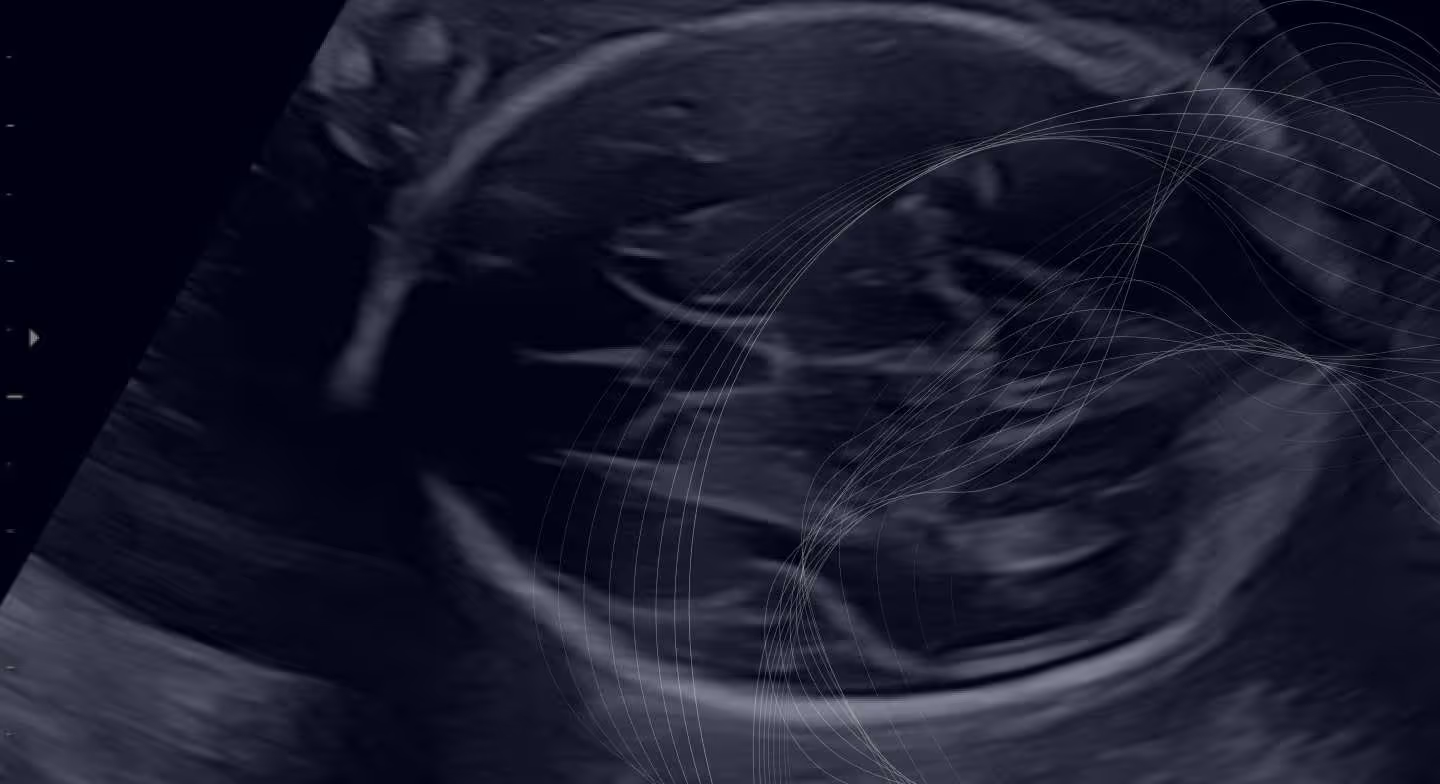
Artificial Intelligence (AI) has become the buzzword of our time, revolutionizing industries and reshaping the way we live and work. But what is AI, and how does it mirror the process of human learning? Imagine a baby learning to identify a dog. At first, they need guidance—someone points to the animal and says, “That’s a dog.” Over time, the baby starts recognizing dogs on their own. Similarly, AI learns by processing data, identifying patterns, and refining its ability to make decisions over time.
Yinka Oylese, MD Director of Obstetric Imaging @ Beth Israel Deaconess Medical Center beautifully explains in this webinar what artificial intelligence truly is. Artificial Intelligence refers to computers mimicking human intelligence. These systems learn from the data provided, recognize patterns, make decisions, solve problems, and continually improve through experience.
AI might seem like a complex concept, but it’s something we encounter daily. If you’ve used ChatGPT for any purpose, watched YouTube recommendations, or interacted with virtual assistants like Alexa or Siri, you’ve experienced AI in action. Another example is facial recognition technology, which eliminates the need to remember multiple passwords, making processes like banking, shopping, and healthcare more seamless. In essence, AI streamlines our lives and makes tasks easier.
The exciting news is that AI is now making waves in medicine too.
Artificial Intelligence (AI) refers to the simulation of human intelligence by machines, particularly computer systems. It encompasses a broad range of capabilities, including machine learning, natural language processing, computer vision, and predictive analytics. These technologies enable AI systems to analyze data, recognize patterns, and make decisions with minimal human intervention.
How AI Works in Prenatal Care
AI is increasingly being used in fetal medicine, transforming how healthcare providers approach prenatal care. For example, in biometrics, machines can now perform automatic measurements. Previously, sonographers and doctors had to do this manually, leading to repetitive tasks and potential time loss. With AI handling these measurements, medical professionals can save time and focus on more critical aspects of patient care.
When AI is guided correctly, it acts as an effective tool, offering real-time assistance and guidance during procedures. This technology simplifies processes, making fetal medicine more efficient and accessible
Here are a few examples of how AI is applied in prenatal medicine
AI for fetal heartbeat analysis
During pregnancy, a baby’s heartbeat provides key information about its health. AI is revolutionizing how healthcare practitioners can interpret these heartbeats. AI has the remarkable ability to detect intricate patterns and subtle changes in fetal heart rates, which can signal potential health issues. This revolutionary approach empowers healthcare providers to take swift and informed action to safeguard the well-being of both expectant mothers and their babies. As we delve further into the era of AI-driven healthcare, the promise of enhanced fetal heartbeat analysis is becoming a reality, holding the potential to revolutionize the care provided to expectant mothers.
AI for prenatal anomaly detection
Deep learning and machine learning, advanced forms of AI designed for image and pattern recognition, are revolutionizing pregnancy care. These technologies analyze data from ultrasounds and scans with remarkable precision, enabling healthcare professionals to detect even rare and subtle abnormalities in fetal development. By offering highly accurate insights, AI supports early and reliable diagnoses. For example, if the system identifies unusual organ formation in the fetus, doctors can proactively develop treatment plans or provide essential guidance to the parents.
AI for Quality Assurance
Quality Assurance (QA) in fetal imaging is vital to improving the detection of congenital anomalies by ensuring ultrasound exams adhere to pre-defined guidelines and standards. QA programs typically involve regular audits, performance reviews, and adherence to standardized protocols recommended by national organizations such as the American Institute of Ultrasound in Medicine(AIUM) and the American College of Obstetricians and Gynecologists (ACOG).
AI-powered ultrasound reporting solutions are transforming QA by automating processes and standardizing workflows. These advanced systems incorporate visual checklists to follow scan progression and adherence to recommended protocols, as well as a quality-check system to ensure images are taken correctly. The overall result is enhanced consistency and quality of exams.
AI for predicting preterm labor
Preterm labor poses potential risks for both the mother and the developing fetus. In this context, AI's predictive capabilities can analyze various data sources, such as maternal health records, lifestyle factors, and medical history, to predict the probability of preterm labor. Healthcare providers can execute preventive measures and interventions based on these insights, such as changing the parents' lifestyle, prescribing certain medicines, or creating special plans of care that match the context
AI for personalized care plans
Genes plays a crucial role in how our bodies work and how we respond to different situations. Genetic information could be very complex and AI may help to analyze it more accurately.
Think of it like a puzzle: AI is a smart puzzle solver that puts together pieces of genetic information to create a picture of what might happen. This helps doctors know what steps to take to ensure a healthy pregnancy and birth. As AI keeps learning and growing, its ability to interpret genetic information becomes more precise. This continuous improvement of genetics empowers doctors to be more accurate and provide effective prenatal care plans. This ensures the best possible outcomes for both the expecting mother and the baby.
AI for real-time fetal monitoring
Maintaining a constant check on the well-being of the developing fetus is of utmost importance to ensure a healthy pregnancy. According to the CDC, there are 23.8 maternal deaths per 100,000 births in the United States and 462 deaths per 100,000 births in low-income countries. Integrating AI-driven mechanisms into wearable devices and sensors can enhance the process of monitoring. These AI-powered systems are instrumental in providing real-time observations of critical factors. These factors include variations in the fetal heart rate, levels of oxygen, and the baby’s movements. Such insights permit healthcare practitioners to identify deviations from the expected norms.
Notable features include automatic clip extraction, which accurately captures imaging sequences, reducing variability while improving efficiency. Furthermore, these solutions provide actionable performance insights, tracking adherence to quality criteria and exam completeness. By leveraging this data, practices can implement targeted training, reduce errors, and foster continuous improvements in care delivery.
Once these deviations are identified, immediate action can be taken. This timely response helps in safeguarding the health of both the expectant mother and the developing fetus. It enables doctors to intervene early and take measures to address any concerns that may arise.
AI has brought remarkable advancements to prenatal medicine. By embracing AI while upholding ethical standards and human care, we unlock better decisions, improved outcomes, and healthier pregnancies.
Why AI Matters in Prenatal Care
The healthcare sector has been one of the most dynamic fields for AI adoption. Medical AI applications aim to enhance diagnostics, streamline workflows, improve patient outcomes, and reduce costs. Key examples include:
- Diagnostics: AI-powered tools can analyze medical images to detect abnormalities, such as tumors or fractures, with high accuracy.
- Predictive Analytics: By processing patient data, AI systems can predict disease risks, enabling early intervention.
- Workflow Automation: AI helps automate repetitive tasks like patient record updates, allowing healthcare professionals to focus on patient care.
- Personalized Medicine: AI-driven models assist in tailoring treatments to individual patients based on genetic, environmental, and lifestyle factors.
AI’s integration into fetal medicine isn’t just about innovation; it’s about improving the quality and efficiency of care. AI automates repetitive tasks, helps ensure quality and consistency of exams, guides healthcare professionals through complex procedures, and ensures accuracy in diagnostics. By embracing AI, prenatal care becomes less burdensome for practitioners and more beneficial for patients.
To delve deeper into the transformative role of AI in fetal imaging, watch the replay of our webinar: AI in Fetal Ultrasound: Latest Advances and Future Horizons with esteemed experts Dr. Yinka Oyelese, MD, Prof. Yves Ville, and Remi Besson, PhD. This insightful session explores advancements and offers a glimpse into the future of AI-powered prenatal care.